
Difference Between Skin Tags, Moles, and Warts
Understanding Different Skin Growths
As you are giving your skin a self-inspection, you may come across unwanted skin growths. This isn’t unusual, and most of the strange little growths you find on your skin are benign, but what are they? Skin tags, warts, and moles are likely answers to this question, and knowing how to tell them apart can help you determine whether what you’re seeing is worth seeing a dermatologist.
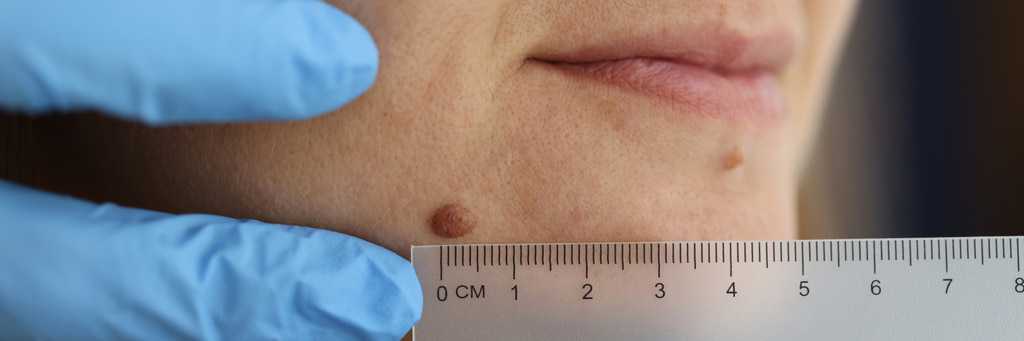
The Difference Between Moles and Warts
It’s easy to mistake warts and moles for each other, since they’re both small growths on the skin. However, they have a few fundamental differences. First, while moles are clusters of pigmented cells, caused by genetics and sun exposure, warts are caused by the human papillomavirus (HPV). Then, too, there are defining characteristics of each type of skin growth that sets it apart.
- Color: Warts are usually skin toned or a little lighter, while moles tend to be pigmented in tones of tans and browns.
- Texture and Surface: Warts are usually rough and firm, with a grainy texture, but moles are usually smooth or slightly raised.
- Size and Shape: Warts are often small, raised bumps, and can vary in size and shape, but moles are usually oval or round.
- Location: Warts can be found anywhere, and are often located on hands, feet, or face. Moles are typically found in areas of sun exposure.
Both warts and moles are usually benign, but they should be carefully monitored. Moles can develop into melanoma, and some skin cancers can mimic warts. If you have a wart that doesn’t heal, or it begins to bleed, it’s worth having it checked by a dermatologist. Similarly, if you have a mole that changes appearance, isn’t symmetrical, or is an odd color, it could be malignant and requires a visit to the doctor.
Moles Vs Warts Vs Skin Tags
Moles are dark, round clusters are pigmented cells, warts are unsightly bumps caused by a virus, but what are skin tags? These little growths are soft and attached to the skin by a stalk. They are mostly made up of loose connective tissue and blood vessels, and have the same color as the surrounding skin. They are usually asymptomatic, and can be anywhere from one to five millimeters in size. Even though they don’t itch or hurt, they may begin to if they become inflamed or infected. Skin tags can be solitary, or there can be several of them in skin folds. Warts can grow in clusters too, but moles usually grow alone.
Causes of Skin Tags
There’s no definite known cause of skin tags, but friction in skin creases is one factor. Skin tags are also linked to type 2 diabetes, heart disease, obesity, hormonal imbalances, genetic conditions, abnormal lipid levels, and prior infection with HPV. Sometimes, though, skin tags can simply be a normal part of aging, due to the loss of elasticity in the skin.
What Causes Warts on the Skin?
Warts, as noted earlier, are caused by HPV. They are contagious, and can be spread not only through skin to skin contact, but also by sharing contaminated personal effects. Warts often grow on places with broken skin. Cracked heels, cuts on the hands, and other places where a virus can take root are common spots for warts, which can spread on the body when they are touched, squeezed, or scratched. A person can have HPV and be asymptomatic, so can spread warts without even being aware of the infection.
How to Tell the Difference Between a Skin Tag and a Wart
It can be tricky to identify whether something is a wart or a skin tag, because both can be skin colored and sometimes grow in clusters. A skin tag typically has a stalk, but sometimes warts do, too. The primary differences between the two types of growth are that skin tags are soft, while warts are rough, and skin tags tend to grow in skin folds, while warts are more commonly found on broken skin.
For Assistance with Skin Growths of All Kinds, Trust Divine Dermatology and Surgical Institute
At Divine Dermatology, Fort Collins’ best name in dermatology, we provide the highest quality care and the most advanced techniques available, in a relaxed and comfortable atmosphere. Our experienced team works under the leadership of the founder of the practice, Dr. Jennifer Divine, who is board-certified by the American Board of Dermatology and a member of the American Academy of Dermatology and the American College of Mohs Surgery. By tailoring treatment plans to meet each patient’s unique needs, and providing personalized attention, we’re able to provide effective care for a wide range of conditions. We treat skin, hair, and nail conditions and provide medical, cosmetic, and surgical services, providing comprehensive for people of all ages. Our expert skin cancer care includes diagnosis and tumor removal using standard surgical techniques and Mohs micrographic surgery, and we treat both common and rare skin conditions, as well as offering a wide array of cosmetic and aesthetic procedures. Reach out to us to schedule an appointment, call us at 970-399-7744 or contact us through our website.
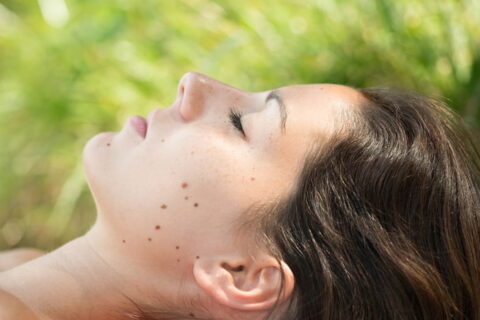
The Connection Between Sun Exposure and Moles
Just about every person has at least one mole, and some people have 40 to 50 moles on their bodies!…
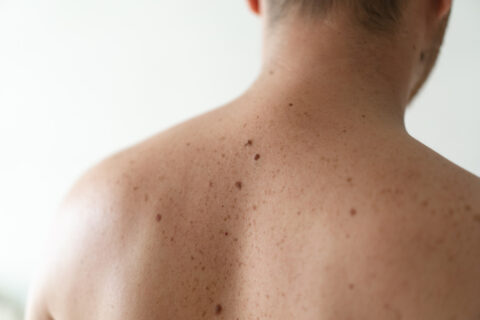
“I have always heard that I should be worried about the moles that are on my skin, but should I really be concerned about the moles on my…